Bout du Lac nature reserve at Lake Annecy: opening hours, rules, access and visitor numbers
A 84 ha marsh open from 7am to 9pm, free of charge, crossed by more than 190,000 people in 2025 on a trail of 1.5 to 2 km. No dogs, no bikes, paid car parks at the neighbouring beach, and a marina project to which the reserve owes its existence.
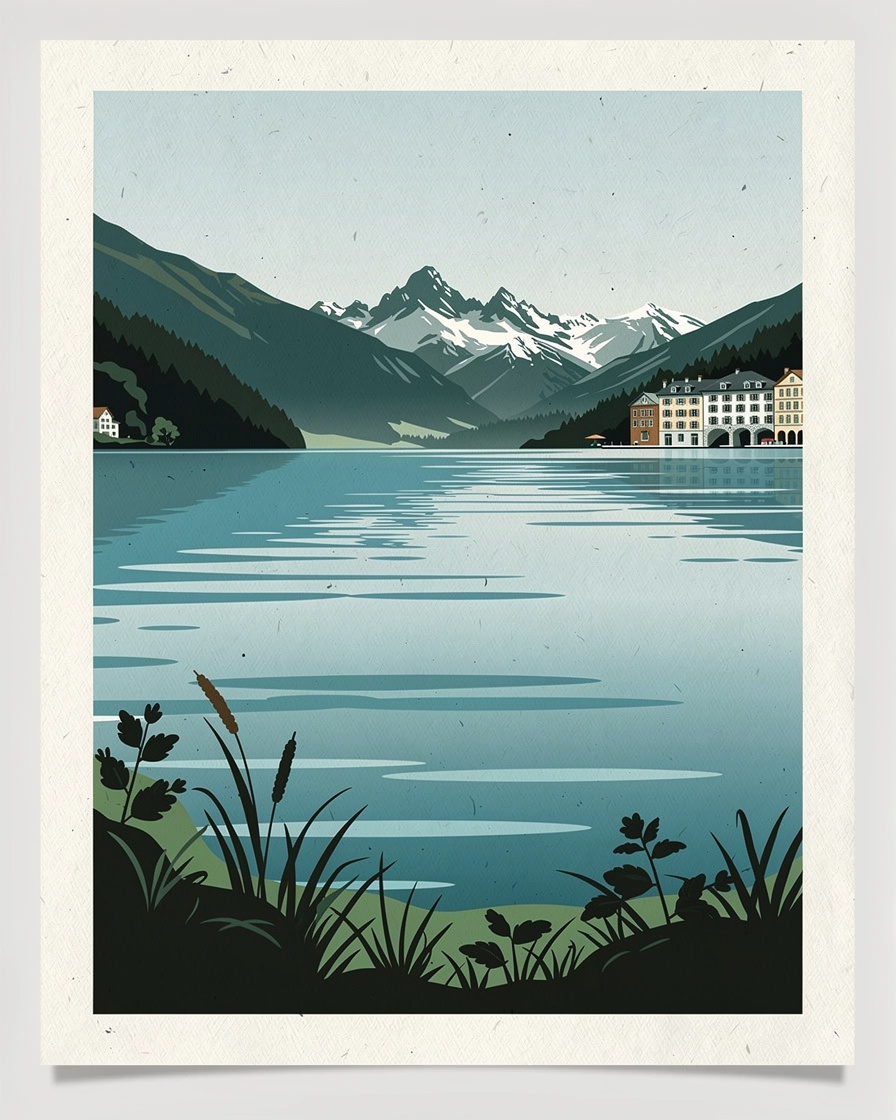
The Bout du Lac national nature reserve is the southern tip of Lake Annecy, where the Ire and the Eau Morte rivers flow into the lake through a marsh. It is free, open all year, and far busier than its size would suggest.
Here is what the site manager, the French environment ministry and the local tourist office publish: opening hours, rules, visitor figures, extra costs, and the story of a stand-off in the 1970s.
What time is the reserve open?
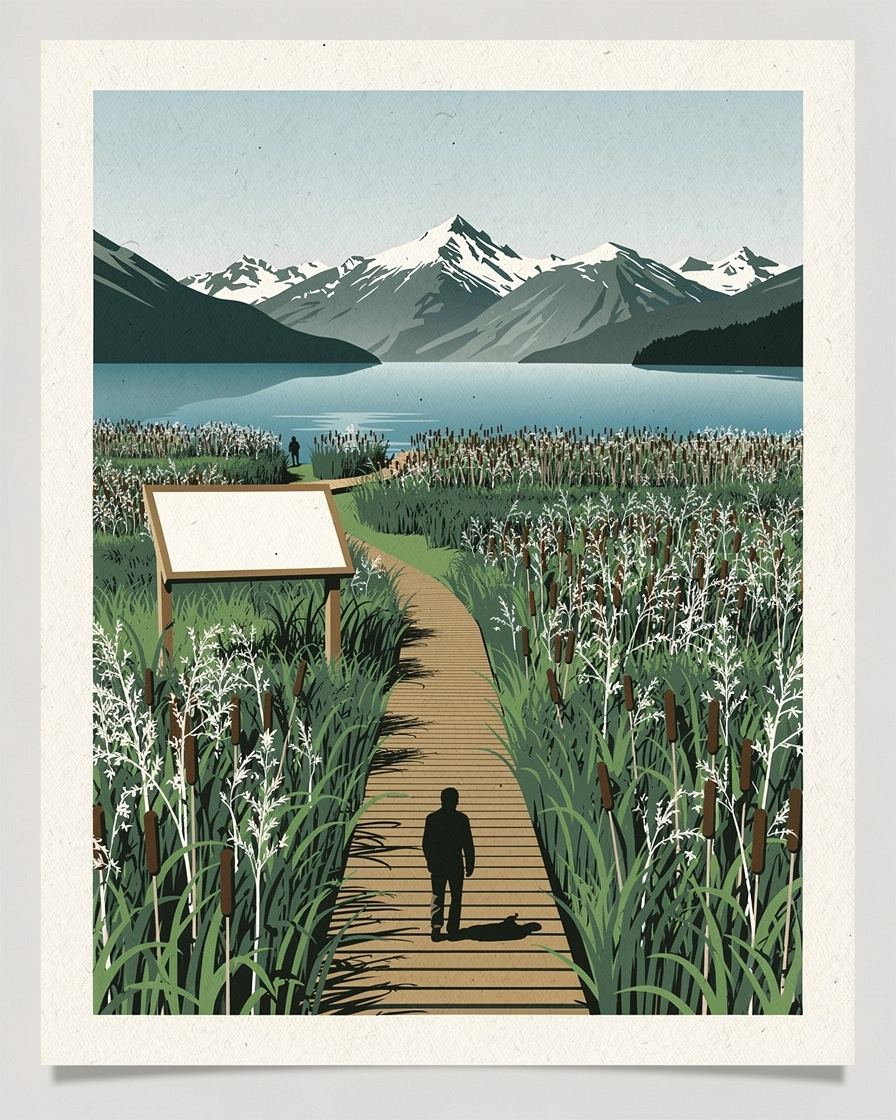
Access on foot is allowed from 7am to 9pm, and forbidden at night. The site manager, the Conservatoire d'espaces naturels de Haute-Savoie (the Haute-Savoie conservation trust), states this on its page and on the site leaflet. These hours appear to be the same all year: no document publishes any seasonal change.
Entry is free and unguided in every season. There is no ticket office, no permanent visitor desk and no opening calendar: it is a protected site under continuous management, not a park with opening times.
What is not published: any record of exceptional closures for flooding or works, or how they are announced. A visitor may find a section closed on arrival, with no way of knowing in advance.
What do you see along the trail?
The reserve covers 84 ha of lakeside marsh, plus a protected buffer of 15 ha on the lake, at an altitude of 450 m, in the municipality of Doussard. Two rivers cross it, the Eau Morte and the Ire, whose delta is included in the protected area.
The nature trail, laid out with pontoons, duckboards and interpretation panels, is 1.5 to 2 km long and leads from the car park to where it opens onto the lake. Reed beds, the transition zones between river and lake, water birds: it is a lowland stroll, not a mountain hike.
Guided walks and kayak trips are mentioned in summer, with no prices or frequency published by the site manager. The offers come from different operators and are not gathered together anywhere.
What is forbidden?
Three bans surprise visitors, because promotional pages barely mention them: dogs, bikes and picking plants. The regulations add hunting, disturbing wildlife and boating in some of the reed beds.
The ban on bikes has a practical consequence: the lakeside cycle path runs through Doussard, and cyclists who want to walk through the reserve have to leave their bikes at the entrance. The route of the cycle path is in cycling around the lake.
How many visitors are there, and why is that a problem?
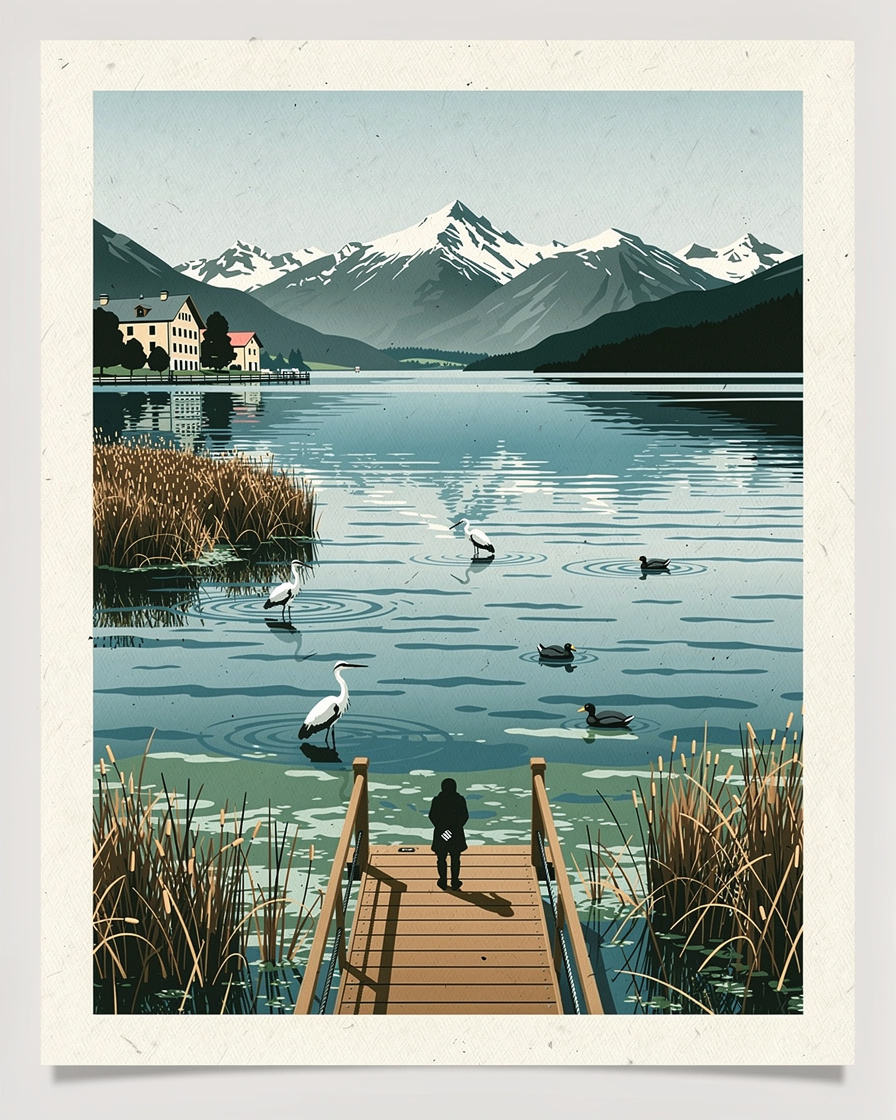
Two figures coexist. The ministry's page speaks of an average of 200,000 visitors a year "in recent years", without giving a range of years. A mountain media outlet, drawing on the automatic counters, gives more than 190,000 visits in 2025 at the Bout du Lac, and nearly 180,000 at the Roc de Chère, the lake's other reserve.
The two values do not contradict each other, they measure different things: a multi-year average on one side, one specific year on the other. The ministry points out that the counters do not distinguish between users, whether walkers, runners or kayakers.
Relative to its area, this footfall makes the reserve one of the busiest protected spaces around the lake. A press article from summer 2025 describes "hundreds of visitors every day" and raises the question of trampling and disturbance to wildlife. The tourist pages prefer the phrase "nature walk".
No monthly, weekly or hourly data is published. The management report only notes that visitor numbers depend heavily on the weather from one year to the next.
The Bout du Lac is best visited early, while the counters are still ticking over slowly: a base on the southern shore puts you on the trail before the day's arrivals. The search for places to stay in Annecy shows each location on the map, so you can aim for Doussard or Duingt rather than the town centre.
See places to stay on the southern shore of the lake →Partner link: booking through this link supports the site at no extra cost to you.How do you get there, and what does it cost?
Entry is free, the car is not. The neighbouring beach, Douss'Plage, has free lifeguard cover from 1 July to 31 August but comes with two paid car parks, according to the Sources du Lac tourist office. No rate is published on its page.
From Annecy, allow 30 to 50 minutes by car or bus to Bout-du-Lac, and 1 to 2 hours by bike along the west shore cycle path. Travel times are on the map of Annecy, bus fares in getting around Annecy.
The full cost of a visit by car therefore comes down to paid parking, plus possibly a guided walk or a kayak, with no published price list for any of the three.
Why is there a national reserve here?
Because a marina very nearly got built here. In the 1970s, the municipality of Doussard backed a plan for a pleasure port that would have concreted over the marsh. The State responded with the decree of 26 December 1974 creating the national nature reserve, against the opposition of local councillors, according to the Friends of the reserve association.
Relations have calmed down since the 2000s: the municipality now supports the conservation trust's management. The reserve is part of the lake's Natura 2000 site, and Doussard has belonged to the Massif des Bauges regional nature park since 1995.
This combination, national reserve plus Natura 2000 plus a protected lake buffer, is the strongest around the lake. The Roc de Chère, the other reserve, protects cliffs and woods above the lake; the Bout du Lac protects a wetland at water level.
When should you go?
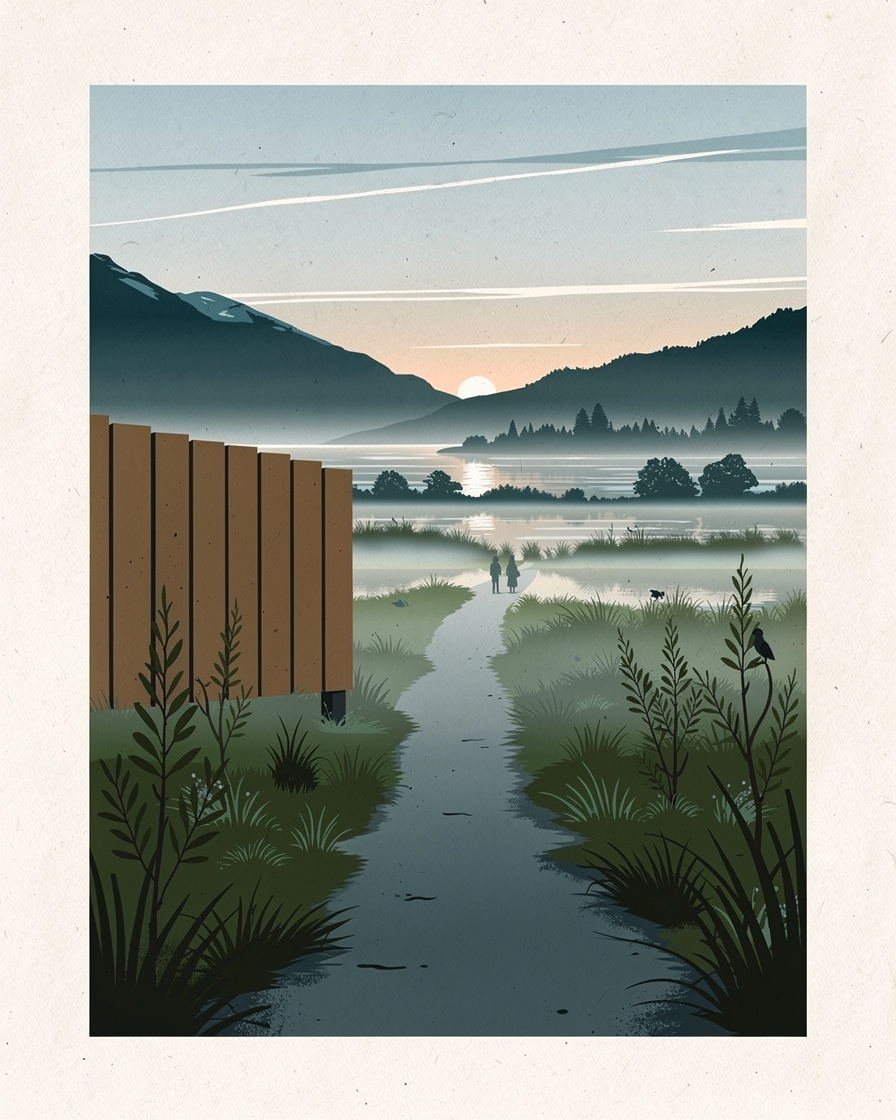
No footfall curve is published, so any advice on timing is an observation, not data. What the figures do allow us to say: visitor numbers follow the weather, and a two-kilometre trail crossed by 500 people on a sunny Sunday no longer feels like a nature reserve.
Early morning and overcast days are when you see birds rather than walkers. Out of season the marsh is empty, the water is low, and the 7am to 9pm opening leaves you the whole day. For everything else about the lake, the main lake page links to each topic.
The marsh can also be seen from the water, without setting foot in it: kayak trips and cruises that stop at the south end of the lake pass offshore from the Ire delta. The Annecy activities page brings the options together with their duration and price.
See trips on Lake Annecy →Partner link: booking through this link supports the site at no extra cost to you.Sources
Conservatoire d'espaces naturels de Haute-Savoie (reserve page of 10 July 2026; Asters-CEN leaflet 2018 updated 2025; 2017 activity report), French ministry for the environment (presentation page and nature trail page, 2026; Natura 2000 management plan FR8201720, 2025), Amis de la réserve naturelle du Bout du lac (history, 2026).
Sources du Lac d'Annecy tourist office (Douss'Plage page 2025; G2A statistics of 13 June 2025), Le Dauphiné (27 August 2025), mon-sejour-en-montagne.com (2026), loisirs74.fr and triplancar.com (2026), Camping Idéal (leisure page, 24 July 2026). Research consolidated on 12 September 2026.
Frequently asked questions
What are the opening hours of the Bout du Lac nature reserve at Lake Annecy?
Are dogs allowed in the Bout du Lac reserve?
How many people visit the Bout du Lac reserve?
How long is the walk through the Bout du Lac reserve?
Do you have to pay to enter the Bout du Lac reserve?

Camille Perrissin
Camille grew up in Sévrier, on the west shore, and swims in the lake from April to November. She has been taking the water temperature herself since 2019 and knows where the bottom suddenly drops away. She writes about the lake without ever turning it into a postcard.